


Churchill Solitaire Card Game
3.5731.00 Reviews
App Specs
- Version
- 2.3.09
- Updated On
- License
- Free
- Downloads
- 10,000+
- Developer
- WSC Solitaire, LLC
- Categories
- Card
- Platform
- Android
Screenshots
 Analysis by AppCompare
I expected a familiar patience game when I opened Churchill Solitaire, but its presentation immediately points in a different direction. This is a free card game from WSC Solitaire, LLC, built around a more demanding take on solitaire and framed through Winston Churchill. The result is less like a quiet way to pass time and more like a compact test of planning, memory, and nerve. I found that distinction important because it changes what I want from each session: I am not simply clearing cards while half-watching a video; I am trying to read the layout and avoid wasting a useful move.
The game has a 3.5 average from around 2.1 thousand ratings, with over 10 thousand installs. Those numbers suggest a modest but real audience rather than a huge mainstream card-game community. It is free to start, aimed at Everyone 10+, and its in-app purchases range from $0.99 to $29.99 per item. I would approach it as a focused specialty version of solitaire, not as an all-purpose card app packed with every traditional variation.
A stern first impression that makes solitaire feel deliberate
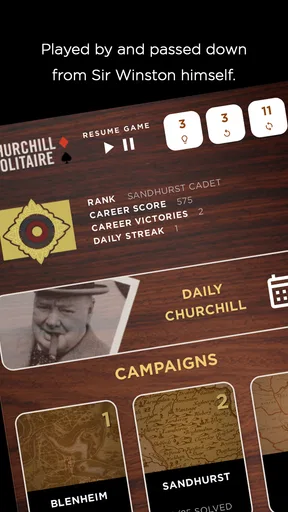
The first thing that works for me is the tone. The Churchill setting gives the game a sense of purpose without turning it into a full story-driven experience. Cards become the center of attention, while the historical framing supplies a slightly severe personality. That matters because ordinary solitaire can become visually anonymous after a few minutes. Here, the identity encourages me to take the board seriously.
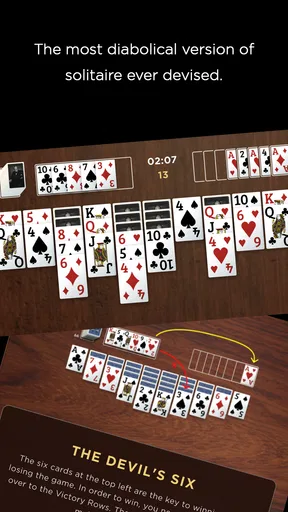
I also like that the concept prepares me for difficulty. The app presents itself as an unusually diabolical version of solitaire, and that promise is not just decorative wording. The design makes each decision feel more consequential than in the gentler solitaire games many people use for relaxation. If you prefer an easy win, this may feel unfriendly. If you enjoy solving a constrained puzzle, the tougher attitude is part of the appeal.
My first useful adjustment was to stop treating every available move as a good move. In simpler solitaire formats, I often move cards immediately because doing so usually opens something helpful. Here, I found it better to pause and inspect the whole arrangement. A move that looks productive can remove the only flexible card from a useful position, leaving fewer options later. That small change in habit is one of the game’s strongest lessons.
The interface is best understood as a workspace for card decisions rather than a decorative digital table. Its success depends on whether I can quickly identify what is playable, what is blocked, and what should remain untouched. When a card layout is easy to read, the difficulty feels earned. When I make a mistake, I generally know it came from poor planning rather than from not understanding the screen.
There is also a practical advantage to the restrained format. I can pick it up for a short break without learning a large collection of modes first. The downside is that players looking for a broad package of classic solitaire games may find the focus narrow. Churchill Solitaire is most convincing when I accept its particular challenge instead of expecting the variety of a general card-game collection.
Worth Reading Before You Choose

Flipboard Shows What News Apps Must Do Beyond the Feed

Switching to Android Auto Means Rethinking Your Driving Routine

Google Calendar Makes a Crowded Week Easier to Manage

Ludo King Makes the Most of the Minutes Between Plans

Baby Panda World Brings Quick Play to Modern Phones, but Its Game Library Feels Busy

ESPN’s Live Game View Makes Following Close Games Easier
Why the setting matters even when the cards remain central
Churchill’s presence gives the game a recognizable voice. It does not need an elaborate fictional world to establish character; the historical association is enough to suggest pressure, discipline, and calculated choices. I felt that mood most clearly during difficult layouts, when a careless move could leave me with no sensible route forward.
This is a good example of art direction supporting mechanics rather than distracting from them. The theme does not replace the puzzle. Instead, it gives the puzzle a reason to feel more demanding. A bright, playful presentation might make the same decisions seem casual, while this one encourages patience. That connection between appearance and play is subtle, but it helps the game stand apart from ordinary card tables.
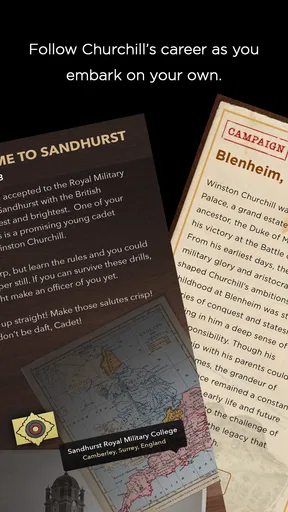
At the same time, I would not choose this app for historical education. The Churchill reference is a framing device for the card experience, not a substitute for a biography or a detailed period setting. Anyone expecting a campaign, characters, or a richly explained historical narrative should look elsewhere. The value of the theme is emotional and atmospheric: it makes the act of planning feel more formal and intense.
The visual language turns a card layout into a mood
Good card-game art has a difficult job. It must establish personality while keeping every suit, rank, and stack readable. In this app, the setting works best when it stays behind the mechanics. I never want the historical flavor to make the cards harder to inspect, because solitaire already asks me to track several possible sequences at once.
The visual identity also affects pacing. A noisy or overly animated card table would encourage quick taps, but the Churchill approach suits a slower inspection of the board. I found myself scanning from one area to another before committing, especially when multiple moves appeared possible. That visual pause is not wasted time; it is where much of the game’s strategy happens.
One of my more useful habits was to divide the layout into three questions: which cards can move now, which hidden or restricted areas might be opened, and which move preserves the most future choices. This is more reliable than chasing the first obvious sequence. The app rewards that kind of mental sorting, and its presentation makes the board feel like a problem to analyze rather than a pile to clear.
That said, the serious tone may not suit everyone. Players who use solitaire as a soothing background activity may prefer softer colors, gentler feedback, and a less confrontational identity. This game’s character is a strength when I want concentration, but it can feel unnecessarily stern when I only want a few effortless wins.
Reading the board before touching the next card
I recommend giving the opening layout a brief inspection before making the first move. Look for moves that expose new information, not just moves that relocate cards. Opening a previously unavailable card can be more valuable than building a longer visible sequence, because information gives you a better basis for the next decision.
Another practical tip is to avoid spending every flexible option immediately. If a card can serve more than one purpose, moving it at once may reduce the number of routes available later. I began treating flexibility as a resource: a move is valuable not only when it advances the board, but also when it keeps several follow-up moves alive.
This is where the game feels more thoughtful than many standard solitaire apps. The challenge is not simply recognizing legal placements. It is weighing timing. The best move now may not be the move that makes the board look most organized. Sometimes the messier position is strategically healthier because it preserves access to more cards.
Sound and rhythm: a card game that asks for pauses
The atmosphere is not created by visuals alone. The sound design, as experienced during play, supports the idea that each card action should have weight. Rather than pushing me toward frantic tapping, the overall presentation leaves room for a measured rhythm: inspect, choose, move, reassess. That cycle fits the game’s demanding style.
I especially appreciate that the rhythm comes from decision-making instead of constant spectacle. In many mobile games, sound effects and animations are used to keep the player moving quickly. Here, the more memorable moments come from realizing that a quiet-looking move has opened a better route, or noticing that an earlier choice has narrowed the board.
For a short everyday session, that pacing works well. Imagine waiting for an appointment with ten minutes to spare. A quick round gives me something focused to do, but it does not require the commitment of a long narrative game. I can play attentively for a while, stop after a difficult position, and return later when I want another mental puzzle. The app fits that use better than a game that depends on continuous action or a large amount of reading.
The trade-off is that the measured rhythm can feel slow if I am looking for instant stimulation. This is not the best choice for someone who wants rapid rewards, bright effects, or a constant stream of new content. Its pleasure comes from gradually understanding the board, so impatient players may interpret its restraint as dullness.
How to use the pacing instead of fighting it
I get better results when I treat a round as a sequence of small evaluations rather than one long attempt to win. After every meaningful move, I scan the available cards again instead of following a plan too rigidly. The board can change enough that an earlier intention is no longer the best route.
I also avoid playing while distracted by another task. This sounds obvious, but the game’s difficulty makes divided attention expensive. Missing one available placement or forgetting why I preserved a card can lead to a poor chain of decisions. If I only have a minute, I would rather inspect the board calmly than tap through it carelessly.
That makes the app surprisingly suitable for people who enjoy low-pressure concentration exercises. It is not a meditation tool, and I would not pretend every round is relaxing. Still, the repeated scan-and-decide rhythm can help me shift away from passive scrolling. The game gives my attention a narrow target without demanding the physical intensity of an action title.
Where the mechanics justify the tougher reputation
The central appeal is the way the game turns solitaire into a planning problem. I have to consider immediate legality and future access at the same time. That creates a useful tension: clearing one area may expose a possibility, but it can also consume the card arrangement needed to solve another area.
Compared with a usual solitaire app, this feels less forgiving and less interchangeable. Traditional versions often let me settle into familiar patterns, and many casual players can play them almost automatically. Churchill Solitaire asks me to remain mentally present. I cannot rely on the same reflexive sequence every time because the value of a move depends on the rest of the board.
That difference is also the clearest reason some people should skip it. If your ideal card game is a relaxing routine with frequent easy victories, the added severity may become frustrating. A conventional Klondike-style app would be a better fit for quick comfort. If you want a card puzzle that punishes careless sequencing and rewards careful observation, this version has a stronger case.
One advanced approach I found helpful is to judge moves by future mobility. Instead of asking only whether a card can be placed, I ask how many useful placements remain afterward. A move that opens one card but blocks two others may be worse than a move that appears less dramatic yet leaves several options available. This way of thinking makes the game feel like resource management without needing complicated extra systems.
Another useful distinction is between progress and information. Moving a card toward an apparent goal can feel like progress, but revealing a new card may provide more strategic value. When I am uncertain, I prioritize actions that improve my understanding of the board while preserving flexible cards. That approach does not guarantee success, but it reduces the number of decisions made blindly.
I also learned not to judge a round too early. A difficult opening can still become manageable if I preserve the right options, while a promising start can collapse after one greedy sequence. The game’s pacing supports this uncertainty. It encourages me to keep evaluating rather than assuming that a tidy board is automatically a winning board.
What the free model means for a regular player
The game is free to download and play, which makes it easy to try without committing money first. In-app purchases are listed from $0.99 to $29.99 per item, so I would pay attention to the purchase prompts and decide in advance whether I want to spend anything. For me, the free entry is enough to judge whether the stricter solitaire style feels rewarding.
I would not recommend buying anything immediately just because a difficult round becomes frustrating. The main question is whether I enjoy the decision-making itself. If I do, optional spending may feel reasonable; if I do not, a purchase will not turn the game into a more conventional, relaxing solitaire experience. The price structure makes it especially important to evaluate the core play before treating extra purchases as a solution.
Device compatibility is also straightforward for many Android users: the current version is 2.3.09 and requires Android 6.0 or later. That makes checking an older phone worthwhile before attempting installation. I would also keep expectations realistic about the app’s scale. With a little over ten thousand installs, it is a focused title rather than a giant social card platform, which may appeal to people who prefer a quieter experience.
Who will enjoy it, and who should choose another card game
I would recommend Churchill Solitaire to players who already understand the appeal of solitaire but want more pressure in each decision. It suits people who like studying a board, preserving options, and learning from failed attempts. The Churchill framing is an extra benefit if you enjoy historical character in game presentation, even when the mechanics remain the main event.
It is also a good match for short, attentive sessions. I can imagine using it during a commute break, before an appointment, or at the end of the day when I want a puzzle that does not require a story to follow. The compact card format makes it easy to begin, while the difficulty gives the session more substance than a few automatic taps.
I would steer casual players toward a standard solitaire alternative if they mainly want relaxation, variety, or a forgiving win rate. I would also suggest looking elsewhere if you expect multiplayer competition, a large collection of card modes, or a detailed historical campaign. This app’s identity comes from doing one challenging style with a distinct mood, not from trying to cover every possible card-game preference.
Players sensitive to frustration should approach it with the right mindset. Losing is not necessarily a sign that the game is unfair; often it reflects a sequence of choices that reduced future possibilities. Still, repeated failure can become tiring, especially when I am playing without enough attention to remember where the position went wrong. Taking a break is more useful than immediately replaying the same way.
Small habits that make the experience clearer
I recommend playing with notifications and other distractions out of the way, because one interrupted decision can change the entire evaluation of a layout. I also find it useful to pause after a major opening and rescan the board from scratch. Continuing automatically from the previous plan is one of the easiest ways to miss a better route.
When introducing the game to a friend, I would explain that the goal is not simply to move cards whenever possible. The interesting part is deciding which legal move should happen first. That single explanation prevents the common mistake of treating every available action as equally valuable.
Finally, I would give the game several sessions before judging it. Its personality is clearer once the initial learning curve settles. The first rounds can feel harsh because familiar solitaire habits are not always helpful. After I began thinking in terms of mobility, information, and timing, the difficulty became more satisfying and less arbitrary.
A coherent atmosphere built around careful play
My overall impression is that the art direction, historical framing, sound, and pacing point in the same direction. They create a stern, focused mood that supports the game’s more demanding card mechanics. Nothing about the presentation makes me want to rush. Instead, it gives each layout the feeling of a small problem that deserves a considered response.
The strongest part is that the atmosphere does not bury the cards. The Churchill identity adds character, but the real experience still comes from choosing between competing moves and living with the consequences. That balance is why the app feels specific rather than like a standard solitaire table with a famous name attached.
There are clear limitations. The focused format will not satisfy people seeking broad variety, social play, or effortless relaxation. The tougher style can also make short sessions more mentally demanding than expected, and the in-app purchase range means I would stay alert to spending decisions. These are not minor details; they define whether the game fits your habits.
For me, the best reason to try it is the combination of recognizable card rules and unusually deliberate decision-making. I enjoy the way a quiet board can hide several competing plans, and I like that the setting reinforces patience instead of interrupting it. If you want solitaire to feel like a focused tactical puzzle rather than background entertainment, this is worth a free trial. I would skip it only if your priority is easy wins or a large menu of familiar variations.
WSC Solitaire, LLC has shaped this version around a clear idea: make the card table feel demanding, distinctive, and slightly intimidating. It will not be everyone’s favorite solitaire game, but it knows what mood it wants and keeps the mechanics aligned with that mood. After spending time with it, I came away valuing the pauses between moves as much as the moves themselves—and that is a strong sign that the design is doing more than simply dealing cards.
Pros
- Classic solitaire rules are easy to learn but offer plenty of strategic depth.
- Quick rounds make it convenient for short gaming sessions.
- Smooth card controls work well on both phones and tablets.
- Daily challenges add variety beyond standard matches.
- Helpful hints can guide new players when they get stuck.
Cons
- Some advanced features may require in-app purchases.
- Random deals can occasionally feel difficult or frustrating.
- Ads may interrupt play for users on the free version.
- The interface can feel busy when several options appear on screen.
- Progress and challenge features may be less appealing to casual players.
FAQs for Churchill Solitaire Card Game
What is Churchill Solitaire Card Game, and how is it different from classic solitaire?
Churchill Solitaire Card Game is a strategic solitaire variation inspired by the game reportedly enjoyed by Winston Churchill. Instead of playing with one standard tableau, you manage two separate rows of cards and must plan several moves ahead. The objective is not simply to clear cards, but to control the board carefully, use the special Devil’s Six cards effectively, and avoid creating blocked positions that can make the game unwinnable.
Is Churchill Solitaire Card Game free to download and play?
The game can generally be downloaded for free, but the exact monetization system may depend on the Android or iOS version available in your region. Players may encounter advertisements, optional purchases, or limits connected to hints, extra attempts, or other conveniences. Before downloading, check the store listing for current pricing, in-app purchase details, and whether an internet connection is required for certain features.
Is Churchill Solitaire suitable for beginners, or is it difficult to learn?
Churchill Solitaire is easy to understand if you already know basic solitaire rules, but it is more challenging than many casual card games. The game introduces additional card-management rules and requires careful sequencing, so new players may lose several rounds while learning. The tutorial or instructional prompts are useful, but success depends mainly on patience, planning, and recognizing when a move may limit future options.
Can Churchill Solitaire Card Game be played offline?
Many core solitaire rounds may be playable without a continuous internet connection, making the game convenient for travel or short offline sessions. However, features such as advertisements, cloud synchronization, leaderboards, account services, updates, or in-app purchases may require connectivity. Offline availability can also vary between versions, so it is best to test the game after installation rather than assuming every feature will work without internet access.
Does Churchill Solitaire Card Game contain advertisements or in-app purchases?
The game may include advertising and optional in-app purchases, depending on the platform, version, and region. These purchases can sometimes provide cosmetic benefits, remove advertisements, or offer helpful resources such as hints or additional gameplay options. Players who prefer a completely uninterrupted experience should review the store description and purchase information carefully, especially before allowing children to play on a device connected to a payment account.


